Popular Searches:
Recommended Posts


Search Results


When we think about robots, we usually picture machines that clean our homes, assist in factories, or act as virtual assistants. But Chinese tech giant Kaiwa Technology is pushing robotics into uncharted territory.
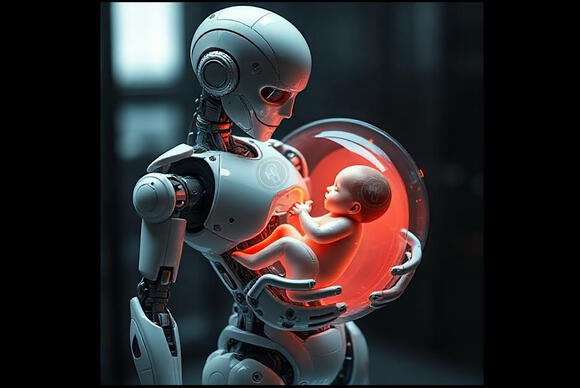
Their latest innovation, set to launch in 2026, is being called the world’s first humanoid Pregnancy Robot a machine that combines artificial intelligence, robotics, and an integrated artificial womb system.
Priced at $13,900, this futuristic robot is not just another gadget. It represents a potential shift in the way humans think about reproduction, parenthood, and the role of technology in our most intimate life experiences, as per report from Digital Trends on X
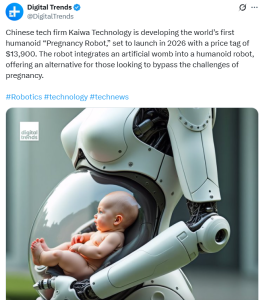
The standout feature of this humanoid robot is its artificial womb, designed to replicate the conditions of a natural pregnancy. Advanced sensors monitor temperature, oxygen, nutrition, and fetal growth, ensuring an environment similar to that of a human uterus.
This means families could “grow” their babies outside the human body while still having a controlled and safe environment.
Pregnancy is a miraculous journey, but it also comes with risks: morning sickness, gestational diabetes, high blood pressure, and even life-threatening complications.
The Pregnancy Robot offers an alternative path for those who want children but wish to avoid the physical and emotional toll of traditional pregnancy.
Kaiwa Technology is not limiting its vision to traditional couples. This robot could also appeal to single parents, LGBTQ+ couples, or people facing fertility challenges.
It may also be useful in countries with growing surrogacy restrictions, offering a tech-based alternative to hiring a human surrogate.
At a cost of nearly $14,000, the Pregnancy Robot isn’t cheap but compared to years of fertility treatments, surrogacy contracts, or adoption fees, the pricing makes it accessible to upper-middle-class families around the globe.
Early adopters are expected to include wealthy tech enthusiasts, fertility clinics, and research institutions.
The humanoid robot won’t just act as a static machine. Built with next-generation robotics and AI systems, it is designed to monitor, report, and adjust pregnancy conditions in real-time.
Parents may even be able to track their baby’s progress through connected apps, livestream updates, and biometric feedback.
The idea of a robot carrying human life challenges long-standing ethical, cultural, and even religious beliefs.
Critics argue it could weaken the natural bond between mother and child, while supporters see it as a tool for equality and medical advancement.
These debates are likely to intensify as the 2026 launch date approaches.
The Pregnancy Robot might emerge as a disruptive competitor to traditional surrogacy, especially in regions where laws or costs make human surrogacy difficult. This could empower people who otherwise had no accessible options for starting families.
Beyond consumer use, scientists see huge potential in this robot for prenatal and genetic research.
Researchers could study fetal growth in controlled environments, experiment with medical breakthroughs, and better understand pregnancy complications without putting human lives at risk.
By removing the need for a biological mother to carry a baby, the Pregnancy Robot could fundamentally change society’s views on gender roles.
Parenthood could become less about biology and more about shared responsibility, giving men, women, and non-binary individuals equal opportunities in family planning.
While Kaiwa Technology’s invention feels revolutionary, many experts believe it’s only the beginning. If successful, this could open doors to even more bio-robotic integrations merging biology and machines in ways that redefine health care, reproduction, and human identity.
The Pregnancy Robot by Kaiwa Technology is more than just a gadget it’s a societal milestone. If it succeeds, it could reshape how we view reproduction, parenthood, and technology. If it fails, it will still be remembered as one of the most daring innovations of the 21st century.
Whether you see it as the future of childbirth or a step too far into artificial life, one thing is certain: the Pregnancy Robot will spark debates, inspire innovation, and remain a hot topic for years to come.